Wedding photography
Mehendi photography ideas: hands, hidden names and the dholki
At a mehendi in Bopal a couple of years ago, I watched the artist spend nearly ten minutes on a patch of the bride’s left palm no bigger than a coin. When she finished, she leaned over to the photographer and whispered, “Wahan hai.” It’s there.
The groom’s name, hidden in the pattern. He would be asked to find it later, with the whole family watching and laughing. The photographer took a macro shot of it right then, with the artist’s finger pointing at it, because once the paste dries and flakes off nobody can find it again, including the artist.
That frame is a good summary of the mehendi. It’s a slow function full of small things that disappear if you aren’t paying attention.
Light in an afternoon tent
Most mehendis happen in the afternoon, under a shamiana or in a decorated courtyard, and they go on for hours. Bridal mehendi alone takes anywhere from three to six hours, depending on how far up the arms and legs it goes. The bride is mostly sitting still. That’s good news for you.
The bad news is the tent. Coloured fabric, usually green, pink or orange, tints all the light that comes through it. Faces go slightly green under a green canopy, and you won’t notice on the back of your camera until you’re editing at midnight.
A few things help:
- Look for the tent opening. Soft side light from an open flap or a doorway is the best light you’ll get all afternoon. If the bride’s seat can face it, ask early, before the artist starts.
- Use a white reflector to put clean light back on faces. It also lifts the hands, which are usually in the bride’s lap and in shadow.
- Set white balance off something neutral in the same light the bride is sitting in. Not off the sky outside.
- Avoid shooting straight down from above in direct noon sun. It flattens the design and puts hard shadows across the fingers.
If the mehendi is indoors, a big window is your friend. One photographer I know carries a roll of white muslin to clip over a window and soften it. It weighs nothing.
Detail and macro: shooting the design itself
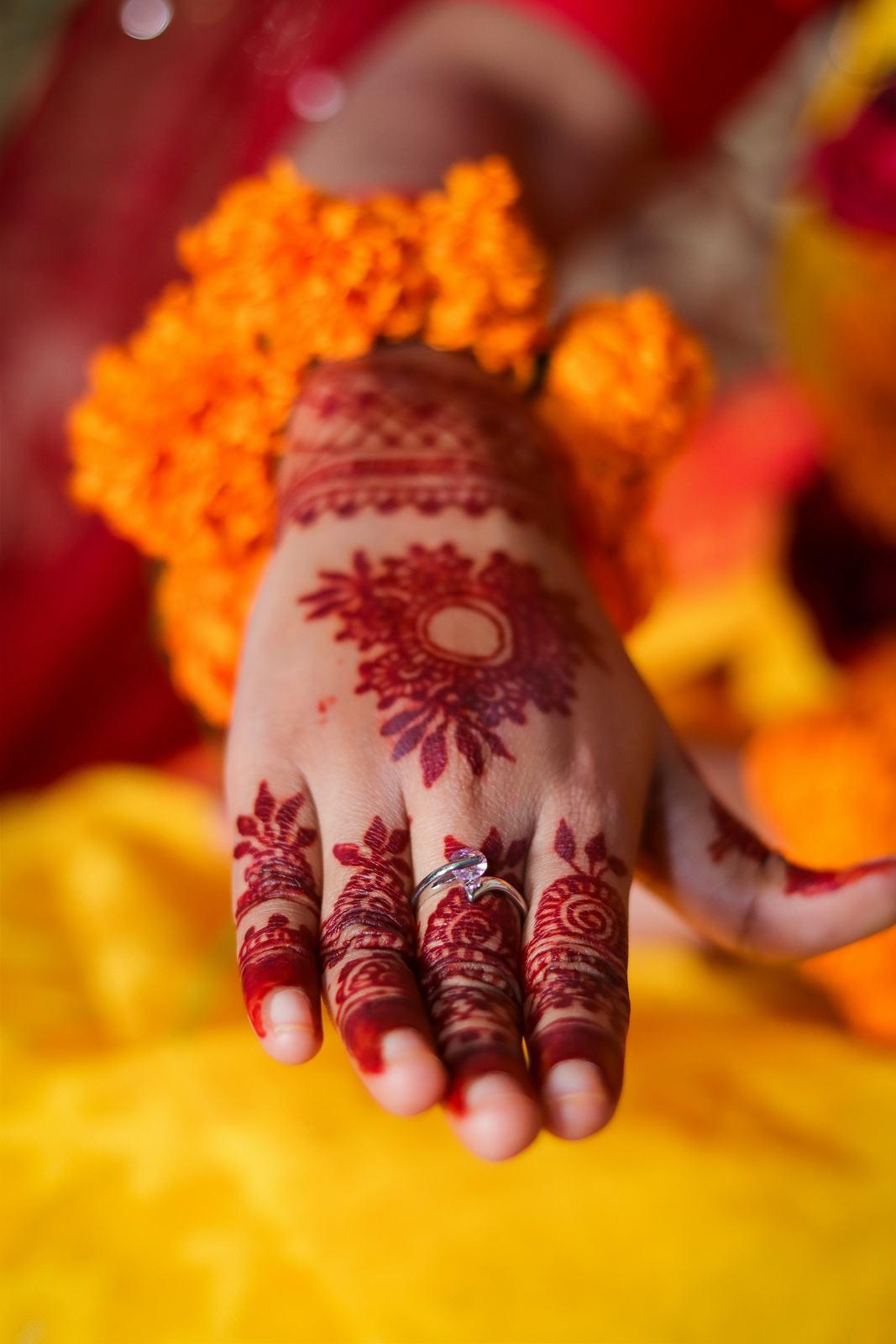
Mehendi detail shots are where a dedicated macro lens earns its place. A 90 mm or 100 mm macro lets you fill the frame with a section of palm from a comfortable distance, without leaning into the artist’s work.
Settings that help
- Stop down to f/5.6 or f/8. A palm is curved, and at f/2.8 half the design falls out of focus. Shallow depth of field looks lovely on a face and messy on a mehendi pattern.
- Shutter around 1/200 handheld, faster if you’re close. Raise ISO rather than drop the shutter.
- Focus on the centre of the design, usually the motif in the middle of the palm, and let the fingers fall off softly.
- Shoot the hand flat and at an angle. Flat shows the whole pattern. Angled, with side light, shows the texture of the raised paste, which is what makes it look real.
If you don’t own a macro, a 50 mm with a set of extension tubes gets you surprisingly close for very little money.
Wet paste and the final stain
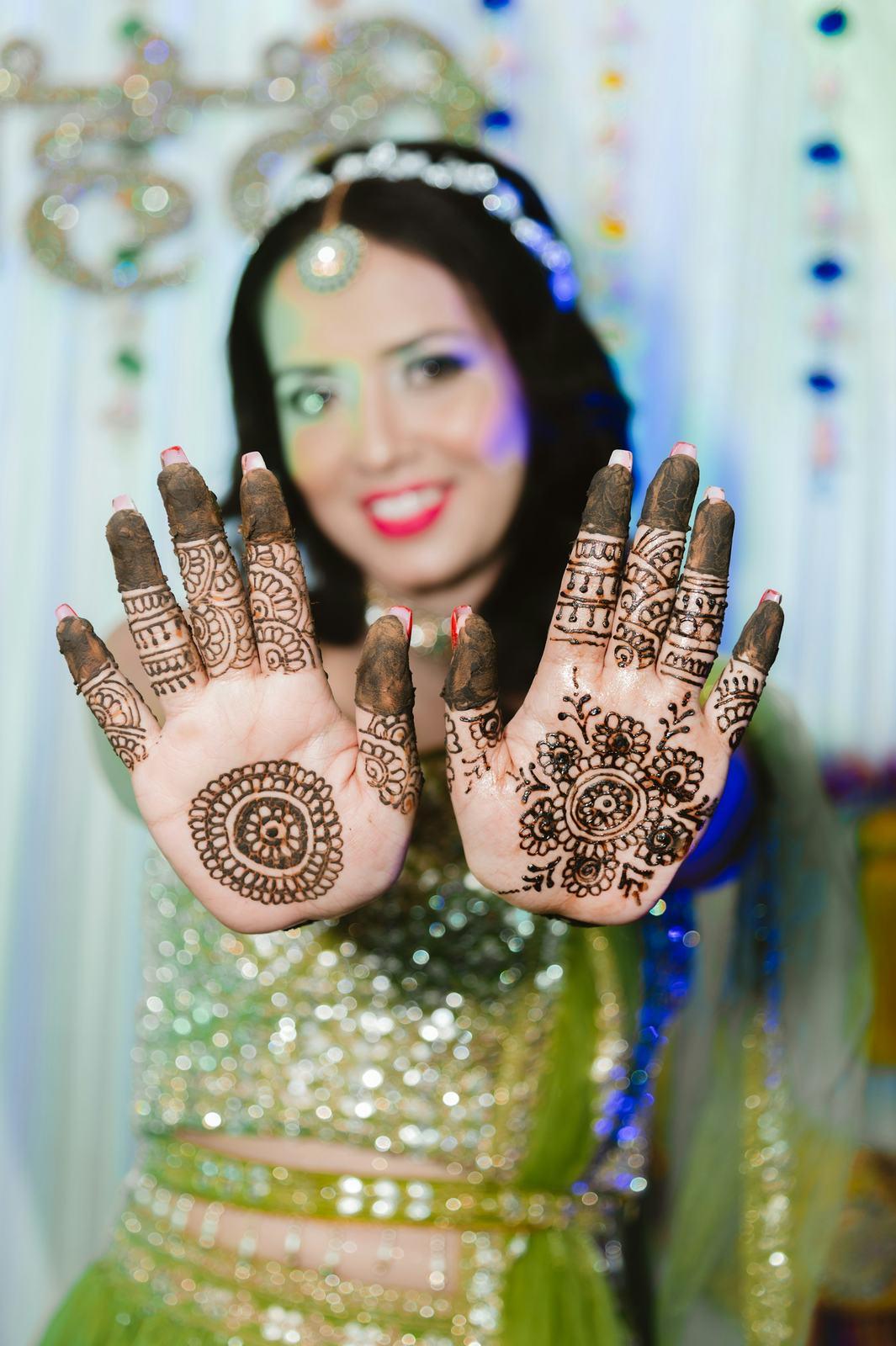
Fresh mehendi is a dark green-brown and slightly glossy. Over the next day or two it darkens to a deep reddish maroon after the paste comes off. Those are two different photographs, and couples like having both.
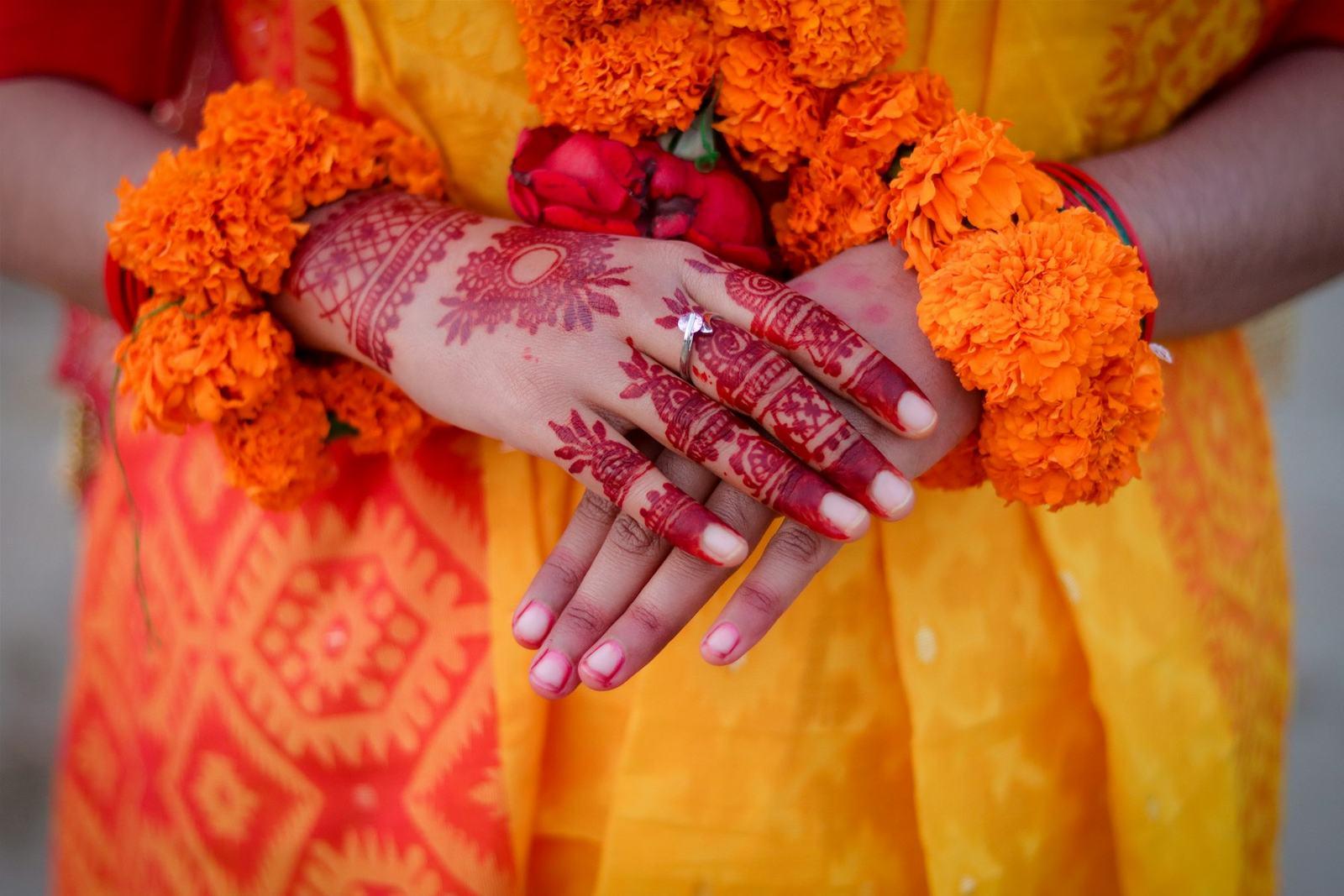
Shoot the wet design on the mehendi day. Then, on the wedding day, grab a quick detail of the stained hands with the bangles and the ring. Lots of photographers forget the second one.
The frames worth planning for
Some of these happen on their own. Some need a word with the bride or her cousins:
- The hidden name. Ask the artist where it is before the paste dries. Shoot it with their finger pointing, and again later when the groom is trying to find it.
- The artist at work. Close on the cone, the artist’s hands, the half-finished pattern. It shows the effort.
- Both hands up, palms facing the camera, framing the bride’s face. A classic for a reason.
- Feet. Bridal mehendi often goes to the ankles, and the detail on the feet is lovely and often skipped.
- The mother and grandmother getting theirs done. These are quieter frames and they matter to the family.
- Hands with something in them. Marigolds, a kulhad of chai someone is holding up to her lips because her hands are wet, the ring.
- Cousins’ hands in a circle, all with mehendi, shot from above.
- Kids with tiny mehendi, holding their hands up proudly.
The dholki and the music
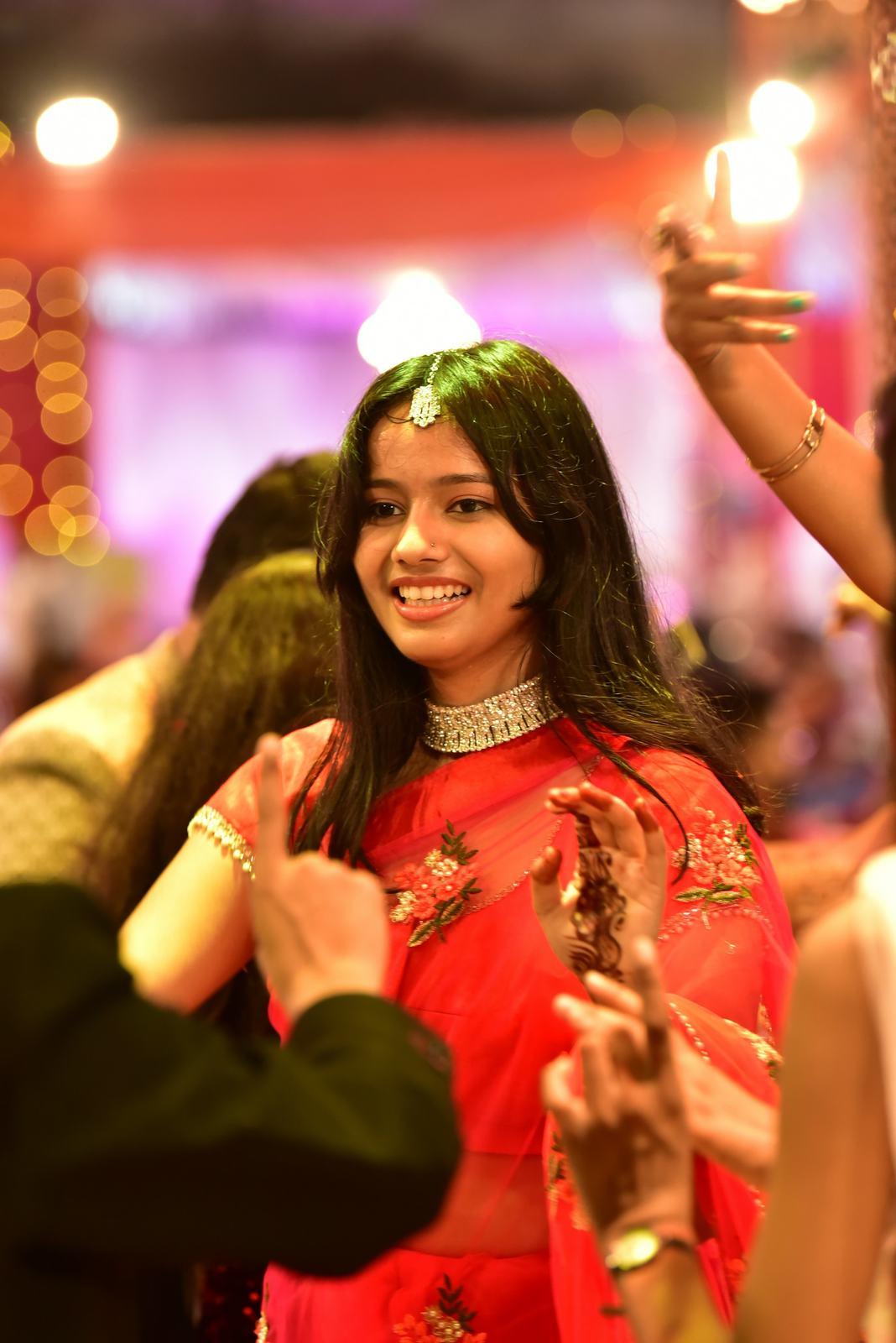
At many weddings the mehendi slides into a dholki session in the late afternoon. Someone brings out a dholak, an aunt starts a song everyone half knows, and somebody’s mother plays it with a steel spoon against the side of the drum.
This is where you put the macro away.
The good frames here are faces. The aunt singing with her eyes closed. The bride laughing with wet hands held awkwardly out in front of her. The cousin who has decided she is a professional dancer. Shoot from a low angle, from the edge of the circle, with a 35 mm or 50 mm prime. Let some motion blur into hands and dupattas if the light is going; a 1/60 shutter with sharp faces and moving hands feels like the afternoon did.
At Gujarati weddings the evening sometimes turns into garba right there. If it does, your next problem is low light, which I’ve covered in the sangeet and garba piece.
Styling that still feels natural
Couples increasingly want a few styled mehendi frames that look editorial without looking stiff. A few ideas that I’ve seen work without taking over the function:
- A flat lay with the lehenga, jewellery and the bride’s hand resting on top. Do it while she’s still sitting, so she doesn’t have to move.
- The mirror shot. Her reflection admiring her hands, shot over her shoulder.
- Bride and groom’s hands together, if he’s around. His plain hand next to her detailed one is a nice contrast.
- A coloured backdrop: a dupatta, a door, a wall of marigolds behind the hands. Keep the colours to two or three.
Keep these to ten minutes. The mehendi belongs to the family, not the shoot.
Making sure guests get their mehendi photos
The mehendi is when lots of guests get their own mehendi done, so it produces more guest photos than people expect. Every aunt wants to see hers.
After the wedding, upload with the mehendi as its own folder, click Find faces, and share the guest link. Each guest takes a selfie and sees the photos with their face in them. For the hand-only detail shots, the couple can mark them as shared with everyone from their own gallery, so every guest sees them alongside their personal photos.
The bride, meanwhile, will want every detail frame of her hands in full resolution, because she’s going to zoom in. That’s one more reason not to deliver over WhatsApp, which flattens fine patterns into mush. SpotMe keeps your originals as uploaded, and guests can choose the original or a lighter mobile download. There’s more on that in delivering photos without losing quality.