I should admit something up front. I’m not a wedding photographer. I’m the person who spent two years building the software that looks at what wedding photographers upload, and along the way I’ve sat through a lot of haldis with a camera bag on my shoulder and a borrowed second body, mostly getting in the way.
What I can tell you is what ends up in the galleries. Haldi folders are small, often 300 to 600 photos against a few thousand for the wedding day, and couples open them early and share from them heavily. They’re bright, everyone is laughing, and nobody is in their heaviest outfit yet. If a couple posts one wedding photo in the first week, there’s a good chance it’s from the haldi.
So it’s worth getting right. Most of what follows comes from photographers who let me tag along, and who were generous enough to explain what they were doing.
The light is usually the problem
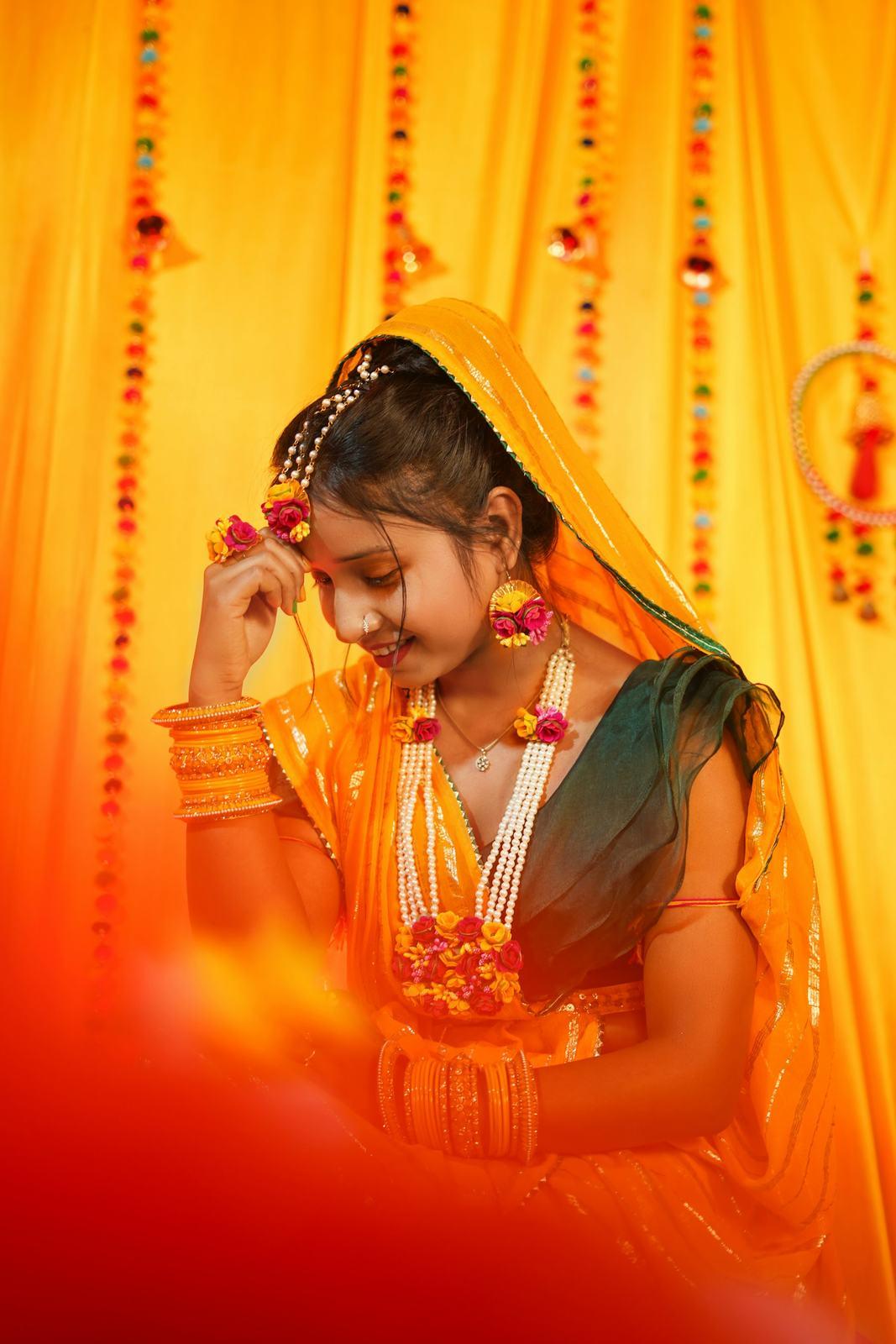
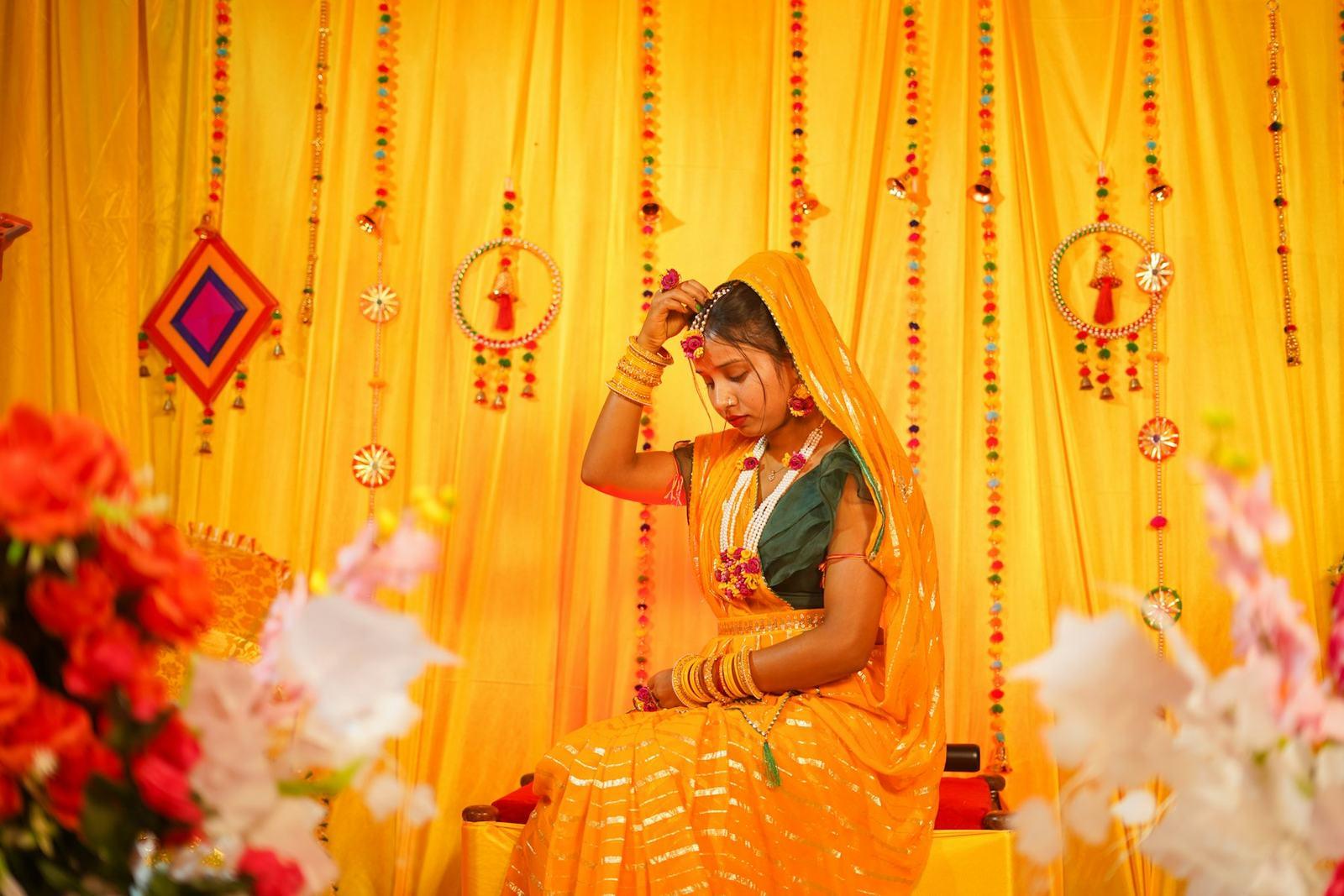
Haldis tend to happen in the late morning or around noon, often outdoors or in a courtyard, under a canopy of yellow and orange drapes. That gives you two separate headaches.
Harsh daylight
Overhead sun puts deep shadows in eye sockets and under noses. The fixes are the old ones:
- Find open shade. A verandah, the edge of the tent, the shadow of the house. Ask the family if the bride’s chair (the patla or patri, depending on the family) can be moved two metres. They usually say yes if you ask before the ritual starts, not during.
- Put the sun behind your subject and lift the face with a reflector or a touch of fill flash. A cousin holding a white thermocol sheet works better than you’d expect.
- Protect your highlights. Yellow clothes and marigolds clip early, especially in the red and green channels. Underexposing by a third of a stop and lifting shadows later saves a lot of frames.
Yellow everything
Under a yellow canopy, all the light that reaches a face has bounced off yellow cloth. Skin turns jaundiced and auto white balance gives up. Set a custom white balance off a grey card at the start, or shoot in Kelvin (around 5,000 to 5,500 K outdoors) and fix it in post.
When you correct, be careful. Pulling yellow out of the whole frame also drains the outfit and the haldi itself. Correct skin with a targeted adjustment or a mask, and leave the yellows mostly alone. The haldi should look like a haldi.
Keeping turmeric off your gear
Haldi paste is turmeric mixed with oil, milk or curd, sometimes besan and rose water. The oil is the problem: it carries the yellow into rubber grips, lens hoods and the seams of your camera bag, and it doesn’t wash out easily.
And someone will come for you. Usually a cousin, usually towards the end, usually with both hands. Photographers are fair game at most haldis.
What the photographers I followed actually carried:
- A rain cover or a cheap plastic sleeve for the body, with a hole for the lens. It looks silly and it works.
- A UV or clear filter on the front of every lens. Wiping haldi off a ₹2,000 filter is less stressful than wiping it off a front element.
- Lens hoods on. They catch flying flower petals and the occasional splash.
- Wet wipes and two microfibre cloths in a zip-lock bag. One cloth for the lens, one for your hands. Never the same one.
- Clothes you don’t mind losing. Several photographers just wear yellow.
The single best habit: don’t change lenses in the splash zone. Pick your setup before the free-for-all starts and step back to the edge if you have to swap.
Lenses that work
The haldi moves fast and the space is usually tight, with family pressed around the bride or groom. A setup I’ve seen work over and over:
| Lens | What it’s for |
|---|---|
| 24–70 mm f/2.8 | Coverage. The ritual, the crowd, the decor in one frame |
| 70–200 mm f/2.8 | Candids from outside the splash zone. Faces mid-laugh without anyone noticing you |
| 35 mm or 50 mm prime | Close, emotional frames once things calm down |
| 85 mm prime | Clean portraits of the bride or groom with haldi on their face |
If you shoot with a second photographer, one stays wide and one stays long. That way the long lens never has to get close to the paste.
For movement, keep the shutter at 1/500 or faster when flowers or haldi are being thrown. Petals look great frozen mid-air and terrible as streaks.
The frames couples always ask for
These come up again and again when couples mark favourites in their galleries:
- The first application. Usually the mother or grandmother. Shoot the hands and the face together, because the expression on the elder’s face is half the story.
- The bride or groom laughing. Not smiling for the camera. Laughing at something a cousin said. Long lens, wait for it.
- The parents’ turn. Dads are often awkward and gentle with the haldi, and those frames get printed.
- Close-up of haldi on the cheek, with jewellery and a bit of the outfit in frame.
- Details: the bowl of paste, mango leaves or betel leaves used to apply it, marigold strings, kalire if it’s a Punjabi family.
- The flower shower or the water fight, if the family does one. Fast shutter, wide lens, and a towel for yourself.
- Siblings and friends smearing each other. These are the frames the cousins will look for first.
- The “after” group portrait. Everyone yellow, everyone together, looking at the camera. Ask for it at the end.
Candid or posed?
Mostly candid. The haldi is one of the few functions where people forget the camera. The one posed frame worth insisting on is that final group portrait, because it’s the photo where every face is visible at once. I’ll come back to why that matters.
Every family does it differently
“Haldi” covers a lot of different rituals. A few examples, with the warning that families vary even within one community:
- Gujarati pithi. Often held separately at the bride’s and groom’s homes, sometimes with a small puja first. It can be more intimate than you expect, with close family only.
- Punjabi maiyan or vatna. The paste may include flour and mustard oil, and in some families four women hold a red cloth over the bride while it’s applied.
- Marathi halad. In many families the groom’s haldi happens first, and the leftover haldi is sent to the bride’s home.
- Bengali gaye holud. Turmeric from the groom’s side travels to the bride’s house, usually with gifts, and the morning has its own sequence.
- Telugu mangala snanam or nalugu. Turmeric, oil and a ritual bath, sometimes with a playful nalugu session the evening before.
My advice, borrowed from a photographer in Rajkot who has done hundreds: ask the family elder the night before what happens and in what order. Five minutes of questions saves you from missing the one moment the grandmother cared about.
If both homes are doing haldi at the same time, you need two people. Couples notice when one side has 400 photos and the other has 40.
Getting haldi photos to guests
Haldi photos are the ones guests ask for first, partly because they’re fun and partly because they’re the ones they want for their status. Please don’t send them over WhatsApp. It compresses hard and those vivid yellows turn into blotchy orange.
On SpotMe, keep the haldi as its own folder when you upload. Once the wedding is uploaded, click Find faces, share the guest link, and every guest sees their haldi photos alongside everything else they’re in. Studios using SpotMe often do this the same night as the last function or the next morning.
Now the honest part. Haldi is one of the toughest functions for any face recognition, ours included. A face with a thin layer of haldi is usually fine. Our models are trained on real wedding photos and handle makeup, jewellery and side profiles well. But a face completely plastered in paste, eyes squeezed shut and half hidden behind someone’s hand, can be hard to match. A cousin flipping through the album might not recognise it either.
That’s why the clean group portrait at the end matters. And why it’s worth grabbing a few frames of each close family member early, before the paste flies, when their faces are still clear. Those are the frames that make sure their gallery isn’t missing the haldi entirely.
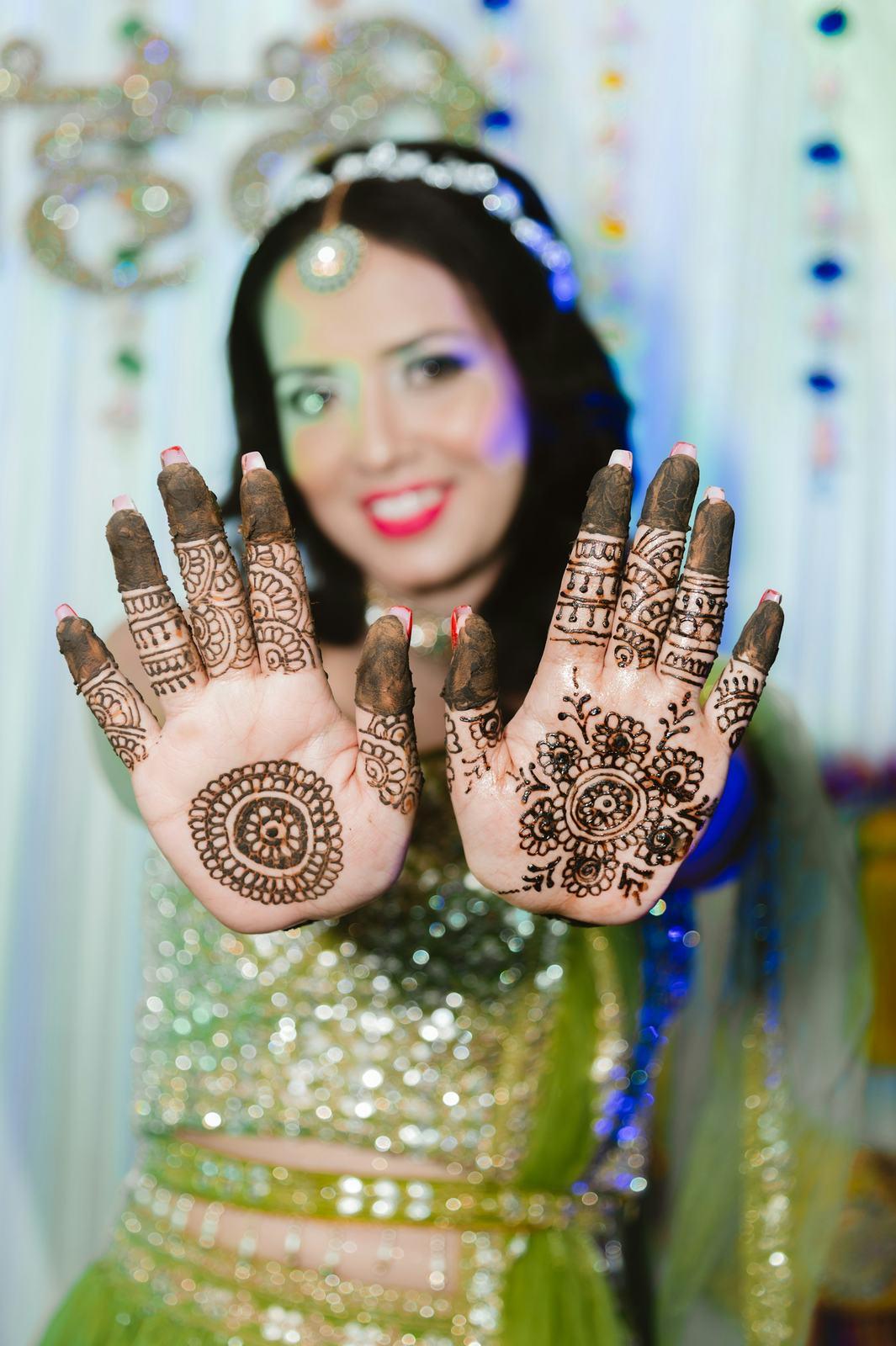
If you want to understand what the matching looks for, I wrote about it in how face recognition photo sharing works. And if your haldi is followed by a mehendi the same afternoon, the light is different again; there are notes on that here.